What are the common faults and methods for right angle J1939 cables
During long-term use, the right angle J1939 cable is susceptible to signal loss, unstable transmission, and loose interfaces due to factors such as vibration, oil contamination, and aging. Timely troubleshooting and resolution of faults can ensure the normal operation of heavy equipment and reduce maintenance costs.
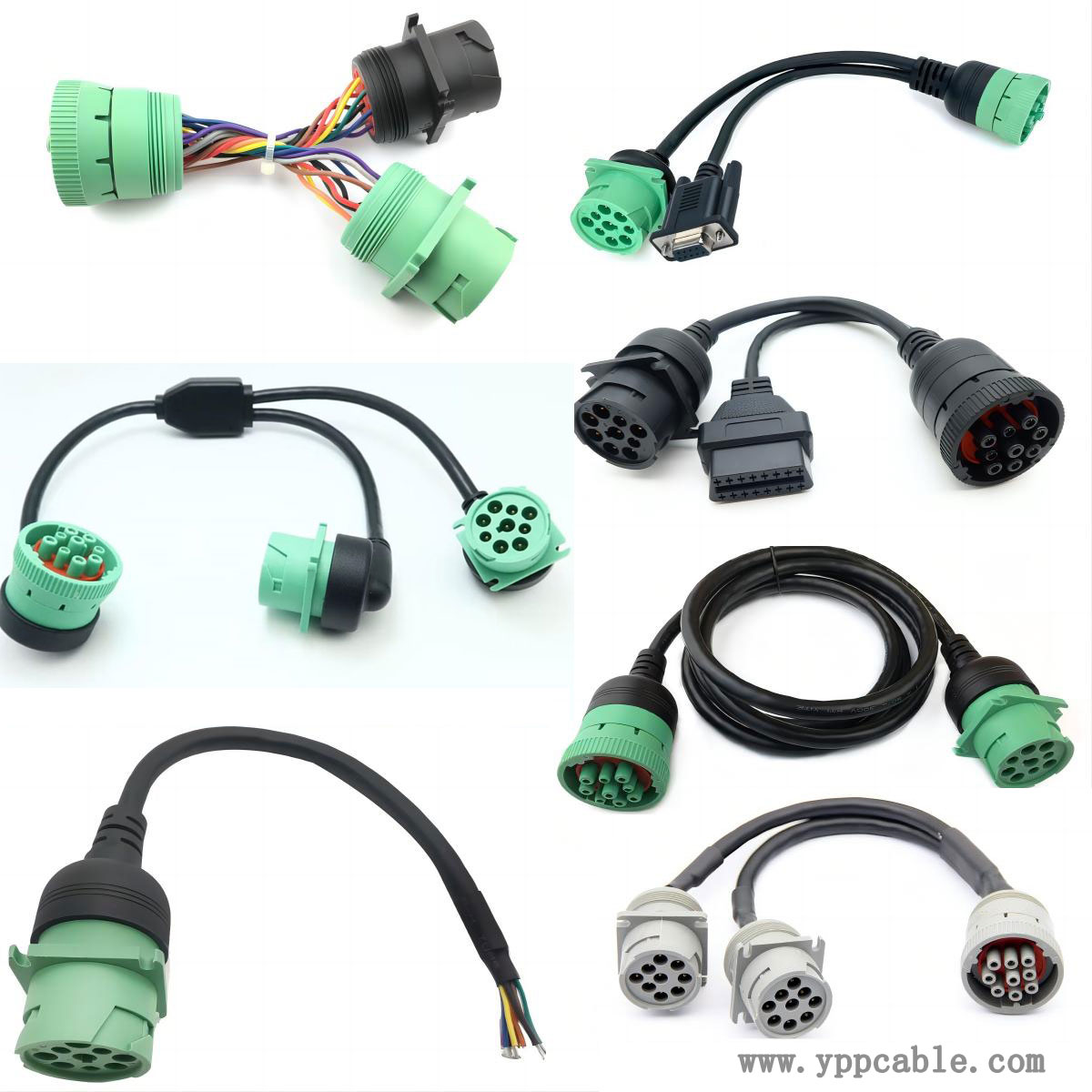
The most common fault is signal loss, which is often caused by three reasons: first, poor contact of the connector, which may be due to loose screws during installation, oxidized pins, or blockage by debris. When troubleshooting, it is necessary to disconnect the connector, clean the pin debris, re tighten the screws, and replace the connector if necessary; Secondly, if the cable is damaged, the core wire is broken or the shielding layer is damaged, the appearance of the cable needs to be checked to find the damaged part. If the damage is severe, the cable needs to be replaced; The third issue is terminal resistance failure. When troubleshooting, use a multimeter to measure the resistance value. If there is an abnormality, replace the terminal resistance.
In addition, unstable transmission is often caused by electromagnetic interference or cable aging. It is necessary to check whether the cable wiring is far away from high-voltage lines, whether the shielding layer is intact, and replace aging cables in a timely manner; Oil leakage and water ingress at the interface are caused by inadequate sealing, and the interface needs to be resealed and coated with insulating grease. When troubleshooting, it is recommended to use professional diagnostic tools, combined with equipment fault codes, to quickly locate the fault point and improve troubleshooting efficiency.
Contact: Kevin Yu
Phone:
E-mail: yppcable@126.com
Whatsapp:
Add: FL2,Bld 6, Hongte Industrial Park, Yongtou , Changan, Dongguan, Guangdong