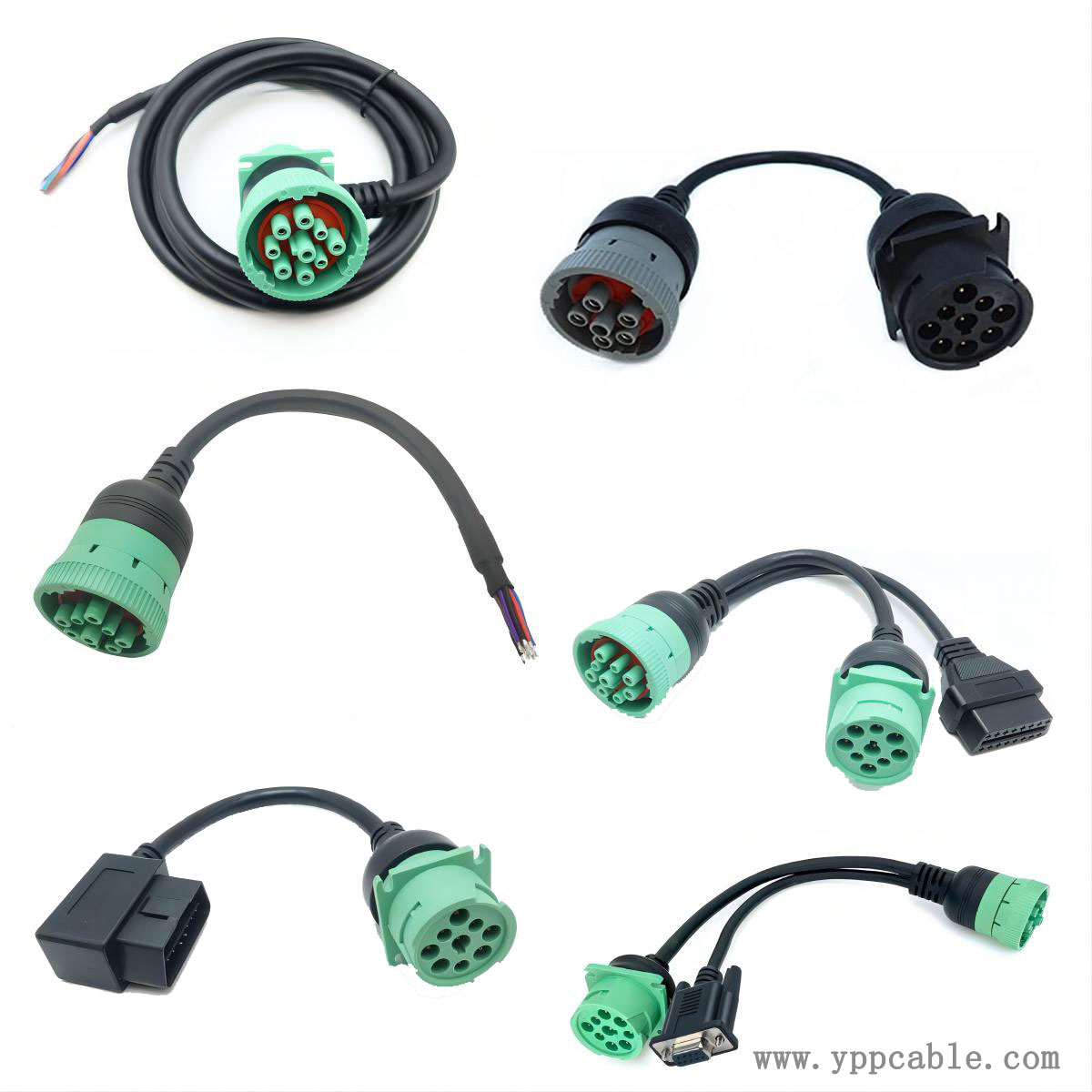
Environmental adaptability analysis of J1939 to J1708 cable
The J1939 to J1708 cable needs to operate under various complex environmental conditions, and its environmental adaptability directly affects the reliability of the vehicle communication system.
Temperature is one of the important factors affecting cable performance. In cold regions, temperatures can drop as low as minus tens of degrees Celsius, and cable materials may become brittle, leading to insulation layer rupture or connector damage. Therefore, cables need to be made of cold resistant materials, such as cold resistant PVC sheaths, to ensure normal operation in low temperature environments. In hot areas, the temperature around the vehicle engine may be high, and the cables should be able to withstand the high temperature without damage.
Humidity can also affect cables. A humid environment can cause a decrease in cable insulation resistance, leading to leakage faults. Cables need to have good moisture resistance, such as using waterproof isolation design, laying anti-seepage film at the bottom of the cable trench, and using epoxy resin coated steel plates on the side walls. At the same time, install temperature and humidity sensors, and start the dehumidifier when the relative humidity exceeds a certain value to keep the cable operating environment dry.
Mechanical stress is also one of the environmental challenges that cables face. The bumps and vibrations during vehicle operation can subject cables to mechanical stresses such as tension and bending. The cable should have sufficient flexibility and tensile strength, and adopt non traction laying technology to control the traction force not exceeding the specified value and avoid conductor tensile deformation. The connector should be sturdy and able to withstand frequent insertion and vibration to prevent loosening and poor contact.
Contact: Kevin Yu
Phone:
E-mail: yppcable@126.com
Whatsapp:
Add: FL2,Bld 6, Hongte Industrial Park, Yongtou , Changan, Dongguan, Guangdong